
Silverlight Popup Dialog
This free Silverlight Popup Dialog is easy to implement on your Silverlight driven website and is also customizable to provide a visual feel suitable for any site design.
To view the full Popup Dialog demo please see the main Silverlight controls demo. To use the Popup Dialog control you will need to add a reference to Liquid.Popup.dll in your project.
 You need to login to Download the Popup Dialog example, If you do not have a login you can register for free!
How to Use the Popup Dialog Control
To use the Popup Dialog on your Silverlight page:
In your C# code behind file you can refer to the Dialog using areYouSure. In this example we create a simple popup dialog containing OK and Cancel buttons with some text, to show the dialog click the 'Show Dialog' button.
Like the .NET modal dialogs, we make a call to the Show() method or the ShowAsModal() method when we want to display the dialog. Notice how the other controls on the parent Canvas become disabled when the dialog is displayed, this ensures the user closes the dialog before they can continue with your Silverlight application.
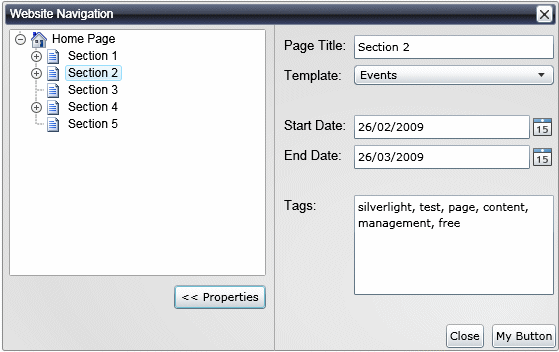
Example Silverlight Popup Dialog Control:
Further Information
Guide the car to its parking space in this fun Car Parking game.

Aim for the Trash Can and get the various items of Trash in the bin.
Fly your plane in this colorful vertical scrolling shoot-em-up. Blast the bad guys and collect any bonus's they leave behind.
Pop as many bubbles as possible in this fun and colorful bubble popping game. The levels start off easy enough but gradually get harder!
Here we have a bunch of monsters that need to be matched up. Look out for the bomb and spinning monsters that will cause special damage!

Guide your friendly Bird through the maze of pipes and other obstacles collecting the Stars in this cool arcade game inspired by the legendary Flappy Bird.
You are stranded on an Alien planet. Your goal is to build a space rocket and escape. Start by building units to create power and mine the metal patches. Build defenses to defend your base from the advancing Aliens and Zombies!

Play Pool against the computer or battle against your friends in the online mode!
Slice the fruit that is thrown up onto the screen. Slice the fruit into multiple pieces for maximum points!